








































New figures show UK construction insolvencies crept up in July, highlighting ongoing financial pressure across trade sub-sectors.
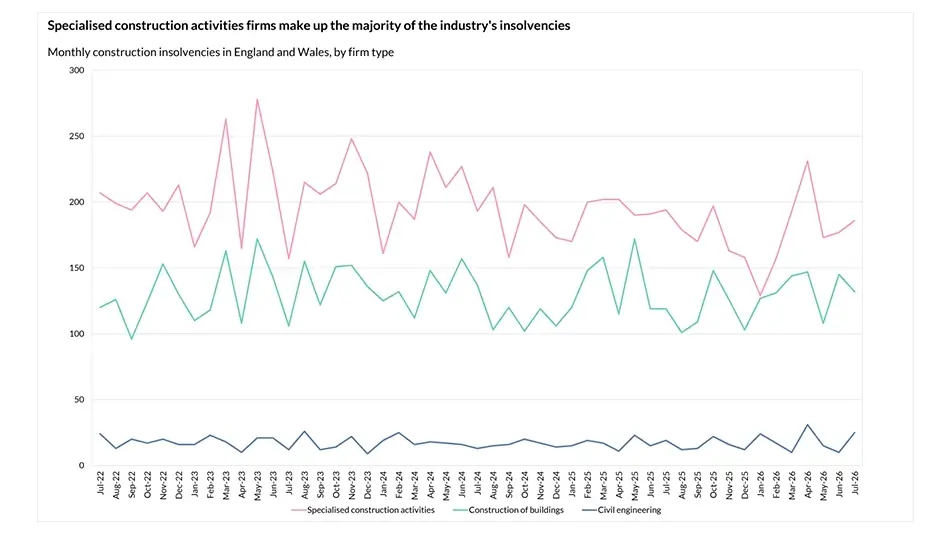
Official insolvency figures show a renewed uptick in UK construction business failures during July. The sector continues to account for a disproportionate share of overall corporate insolvencies nationwide, driven by sticky material costs, high borrowing rates, and delayed project starts.
Sub-contractors and specialist trade firms remain the most exposed to financial distress. Fixed-price contracts negotiated prior to recent inflationary spikes, combined with late payments from main contractors, continue to squeeze operating margins across the building industry.
The persistent rise in insolvencies underlines the fragile economic backdrop facing small-to-medium enterprises (SMEs) and sole traders. Cash flow remains the primary risk factor for trade businesses, particularly where main contractors stretch payment terms or enter administration while holding retentions.
As larger firms collapse, the downstream impact frequently destabilizes local sub-contractors, merchants, and material suppliers who are left with unpaid invoices and stalled workloads.
What does this mean for a UK tradesperson or DIYer actually buying this kit — does it change what they should pay, buy, or watch out for?
Tradespeople should exercise strict credit control when dealing with main contractors and avoid taking on large fixed-price jobs without fluctuation clauses to protect against sudden material price changes. When sourcing building supplies, subcontractors should verify merchant credit terms and hold off on ordering specialist materials until deposit funds clear. For DIYers and self-builders, contractor insolvency poses a direct risk to ongoing projects; homeowners should negotiate staged payments in arrears, avoid large upfront material cash payments, and confirm that guarantees are backed by insurance rather than relying solely on a builder's trading status.
Reported by Roofing Today — original article
Price alerts on the kit you're watching, plus the deals our team files each day.
Create a free account