Tackling DIY projects around the house can be incredibly rewarding. Whether you're building shelves, painting a room, or undertaking a full renovation, there's a unique satisfaction in seeing your vision come to life. However, even the simplest tasks carry risks. A stray splinter, a loud noise, or a speck of dust can quickly turn a productive afternoon into a trip to A&E.
That's where personal protective equipment (PPE) comes in. Investing in the right safety gear isn't just a good idea; it's absolutely crucial for safeguarding your health and wellbeing. This comprehensive guide from DSIDE.co.uk will walk you through the essential safety gear for DIY work, helping you make informed choices to protect yourself, your family, and your projects.
The Golden Rule: Assess Your Risks Before You Start
Before you even pick up a spanner or turn on a power tool, take a moment to consider the potential hazards of your task. Are you dealing with dust? Loud noises? Flying debris? Chemicals? Heavy objects? Understanding the risks will dictate the type and level of protection you need. This simple step is the foundation of smart DIY safety.
Essential Safety Gear for Every DIYer
Let's break down the must-have safety equipment, categorised by the parts of your body they protect.
1. Eye Protection: Don't Risk Your Vision
Your eyes are incredibly vulnerable during DIY. Sawdust, paint splatters, metal shards from grinding, or even a spring from a faulty mechanism can cause irreversible damage. Always wear eye protection when using power tools, working with chemicals, or anything that might produce projectiles or splashes.
-
Safety Glasses: Ideal for general protection against dust and light impact. Look for models conforming to EN166 F (low energy impact) or B (medium energy impact). Brands like Uvex, Bolle, and 3M offer excellent clarity and comfort. Prices typically range from £5-£20.
-
Safety Goggles: Provide a tighter seal around the eyes, offering superior protection against dust, liquid splashes, and chemical fumes. Essential for tasks like sanding plasterboard or working with strong solvents. Ensure they also meet EN166 standards.
Pro Tip: If you wear prescription glasses, look for 'over-spectacles' safety glasses or prescription safety glasses that offer integrated protection. Never rely on your regular glasses for protection, as they can shatter.
2. Hand Protection: Your Most Important Tools
Your hands are your primary interface with your tools and materials. They’re also prone to cuts, abrasions, splinters, burns, and chemical exposure. A good pair of work gloves is indispensable.
-
General Purpose Work Gloves: Perfect for handling rough materials, gardening, or painting. Often made from cotton or synthetic blends with reinforced palms. Expect to pay £3-£15 for a good pair.
-
Cut-Resistant Gloves: Essential when working with sharp objects, blades, or glass. Rated by levels of cut resistance (e.g., Level A-F under EN388:2016). Brands like DeWalt, Makita, and Milwaukee offer robust options. Prices typically start from £10-£30.
-
Impact-Resistant Gloves: If you're hammering, using impact drivers, or working with heavy machinery, these gloves feature padding on the knuckles and back of the hand. Great for protecting against crushing injuries.
-
Chemical-Resistant Gloves: When handling paints, solvents, or strong cleaning agents, choose gloves made from materials like nitrile or neoprene, rated for chemical resistance (check the packaging for specific chemical resistance data).
3. Hearing Protection: Save Your Hearing
Power tools, such as circular saws, angle grinders, and even some drills, can produce noise levels far exceeding safe limits, leading to permanent hearing damage. Protect your ears with:
-
Ear Defenders (Muffs): Offer consistent protection and are easy to put on and take off. Look for an appropriate SNR (Single Number Rating), which indicates the noise reduction capability. For most DIY, an SNR of 25-30 dB is suitable. 3M Peltor is a renowned brand, with prices ranging from £15-£50.
-
Ear Plugs: Disposable or reusable, these are compact and can be good for occasional use or in conjunction with defenders for very loud tasks. Ensure they fit correctly. A box of disposable plugs can be as little as £5.
4. Respiratory Protection: Breathe Easy
Dust, fumes, and vapours are invisible threats that can cause immediate respiratory irritation or long-term health problems. Always wear a mask when sanding, cutting wood, mixing concrete, or spraying paint.
-
Dust Masks (Disposable Respirators):
- FFP1: Filters at least 80% of airborne particles. Suitable for general nuisance dust.
- FFP2: Filters at least 94% of airborne particles. Recommended for plaster, cement, and fine wood dust.
- FFP3: Filters at least 99% of airborne particles. Essential for hazardous dusts (e.g., asbestos, lead) or very fine particles like those from hardwood sanding.
Look for masks with an exhalation valve for increased comfort. A pack of FFP2 masks from brands like 3M or Moldex can cost £10-£25.
-
Half-Mask Respirators: For prolonged exposure or protection against vapours and gases (e.g., from paint spraying or strong adhesives), a reusable half-mask respirator with interchangeable filters is best. Choose filters specific to the hazard (e.g., ABEK filters for organic vapours). A good setup might cost £30-£80 initially, plus filter replacements.
5. Foot Protection: Guard Your Toes
Dropping a heavy tool or a brick on your foot is a quick way to end your DIY day. Safety footwear is non-negotiable for most tasks.
-
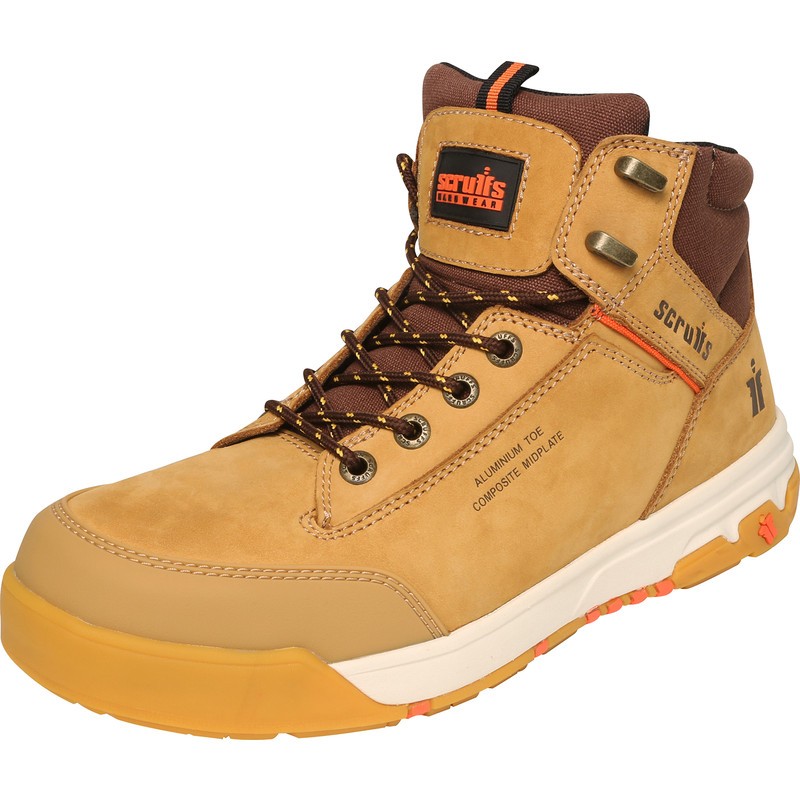
Safety Boots/Shoes: Look for footwear conforming to EN ISO 20345 standards.
- S1: Basic safety toe cap, anti-static, energy absorption in the heel.
- S3: Adds penetration resistance in the sole (e.g., from nails) and water resistance/repellence. Ideal for most DIY.
Brands like Scruffs, CAT, and DeWalt offer durable and comfortable options. Prices range from £40-£100+ depending on features and brand.
6. Head Protection: Hard Hats for Overhead Work
While not an everyday DIY item, if you're working in an area with a risk of falling objects (e.g., under scaffolding, dismantling ceilings, or working in confined spaces with overhead hazards), a hard hat is crucial. Ensure it meets EN397 standards. Basic hard hats are available from around £10.
7. Body Protection: Workwear and Hi-Vis
-
Durable Work Trousers: Protect your legs from scrapes and tears. Many feature reinforced knee pad pockets – a lifesaver when working on your knees. Brands like Snickers, Scruffs, and Milwaukee offer excellent workwear.
-
Knee Pads: Whether integrated into trousers or worn separately, knee pads prevent discomfort and injury when working on hard surfaces. Essential for tiling, flooring, or working in low spaces. Prices £10-£30.
-
Hi-Vis Clothing: If you're working near roads, at dawn/dusk, or in areas with vehicle movement (even just reversing your own car into a busy driveway), a hi-vis vest or jacket (conforming to EN ISO 20471) makes you much more visible. These start from £5-£20.
8. The Inevitable: First Aid Kit
Despite all precautions, accidents can still happen. A well-stocked first aid kit is an absolute must-have for any DIY environment. Ensure it contains plasters, antiseptic wipes, bandages, medical tape, pain relief, and possibly eye wash. Regularly check expiration dates and replenish used items. A basic DIY first aid kit can be bought for £10-£30 from retailers like Screwfix or Amazon UK.
Beyond the Basics: Task-Specific Gear
For more specialised tasks, you might need additional PPE:
-
Welding Helmets: If you're welding, a proper auto-darkening welding helmet is essential to protect your eyes and face from intense UV light and sparks.
-
Fall Protection: When working at significant heights, harnesses and lanyards may be required. This is typically for professional work but crucial for serious DIYers undertaking roof work, for example.
Buying Tips and Maintenance for Your DIY Safety Gear
-
Check for CE Marking: All legitimate PPE sold in the UK must have a CE mark, indicating it meets European safety standards.
-
Comfort and Fit: Safety gear is only effective if you wear it. Ensure it fits comfortably and doesn't hinder your movement or vision. Try it on before buying if possible.
-
Inspect Regularly: Before each use, quickly check your PPE for damage, wear and tear. Cracked safety glasses, torn gloves, or deformed hard hats offer compromised protection.
-
Clean and Store Properly: Clean your gear according to manufacturer instructions and store it in a dry, safe place away from direct sunlight or extreme temperatures to prolong its lifespan.
-
Replace When Worn Out: Don't try to squeeze extra life out of worn-out gear. The cost of replacement is far less than the cost of an injury.
Where to Buy Your Safety Gear in the UK
Leading UK retailers for quality DIY safety gear include Screwfix, Toolstation, and online giants like Amazon UK. You'll find a wide selection from top brands like DeWalt, Makita, Bosch, Milwaukee, and even brands like Ryobi that sometimes offer branded PPE.
To ensure you're getting the best deal on all your essential safety equipment, remember to use DSIDE.co.uk. We compare prices from multiple UK retailers, helping you save money without compromising on safety or quality. Simply search for the item you need, and we'll show you where to find it for less.
Conclusion: Safety First, Always
Picking the best safety gear for your DIY work isn't about being overly cautious; it's about being prepared and responsible. By investing in the right PPE and consistently using it, you minimise risks, enhance your focus, and ensure that your rewarding DIY projects remain safe and enjoyable from start to finish. Don't leave your safety to chance – equip yourself properly, and compare prices at DSIDE.co.uk today!







































Comments (0)
No comments yet.