Choosing the Right Drill: Your Ultimate UK Buying Guide for Every Task
Whether you're a seasoned professional on a construction site or a weekend DIY enthusiast tackling a flat-pack furniture mountain, a drill is arguably the most essential tool in your arsenal. But walk into any tool shop – be it Screwfix, Toolstation, or browsing on Amazon UK – and you'll be met with a bewildering array of options. Cordless, corded, impact, combi, SDS... where do you even begin?
Fear not! This comprehensive buying guide for the UK market will demystify the world of drills, helping you understand the different types, key features, and what to look for to ensure you pick the absolute best drill for your specific needs and budget. And remember, once you know what you're after, you can always compare prices effortlessly right here on DSIDE.co.uk!
Why Choosing the Right Drill Matters
Using the wrong drill for a job can be frustrating, inefficient, and even dangerous. A drill that's too powerful for delicate tasks might strip screws or damage materials, while one that's underpowered for heavy-duty work will struggle, overheat, and ultimately fail. Investing a little time upfront to understand your options will save you money and headaches in the long run.
Understanding the Different Types of Drills
Let's break down the most common types of drills you'll encounter:
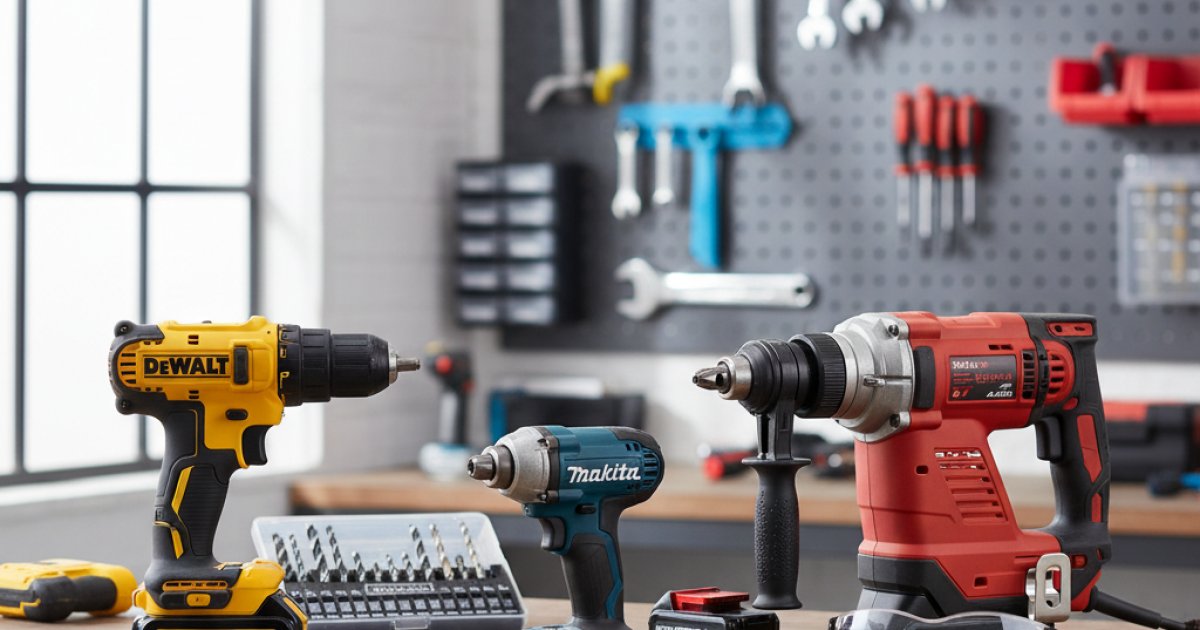
1. Cordless Drill/Driver
- What it is: The most versatile and popular drill type. It can drill holes in wood, plastic, and metal, and drive screws efficiently. Most come with a clutch mechanism to prevent overtightening.
- Ideal for: General DIY, furniture assembly, hanging pictures, light repairs, drilling pilot holes.
- Key Brands: Ryobi, Bosch (Green), DeWalt, Makita, Milwaukee.
- Price Range (indicative): £60 - £250 (depending on voltage, battery, and brand).
2. Cordless Combi Drill (Hammer Drill/Driver)
- What it is: An upgrade from the standard drill/driver, a combi drill adds a 'hammer' function. This enables it to drill into masonry (brick, concrete, stone) with a rapid hammering action, as well as performing all the tasks of a regular drill/driver.
- Ideal for: Home renovations, installing shelving on brick walls, light to medium masonry drilling, all general DIY tasks. If you're only buying one drill, a combi drill is often the best all-rounder.
- Key Brands: DeWalt, Makita, Bosch (Blue), Milwaukee, Einhell.
- Price Range (indicative): £100 - £400+ (from DIY models to professional-grade kits).
3. Cordless Impact Driver
- What it is: Distinct from a drill, an impact driver delivers a rotational force coupled with short, sharp, powerful impacts, specifically designed for driving long screws and bolts quickly and efficiently. It doesn't have a chuck like a drill; instead, it has a hexagonal collet for quick-change bit insertion.
- Ideal for: Driving large quantities of screws, fastening decking, building sheds, automotive work where high torque is needed. Less suitable for drilling holes unless using specific hex-shank drill bits.
- Key Brands: Makita, DeWalt, Milwaukee, Bosch (Blue), Ryobi.
- Price Range (indicative): £80 - £250 (often sold as part of a kit with a combi drill).
4. SDS+ Rotary Hammer Drill
- What it is: A heavy-duty hammer drill designed for serious masonry work. SDS (Slotted Drive System) chucks are specifically designed for SDS bits, allowing them to slide back and forth for maximum hammering power without binding. Much more powerful than a combi drill's hammer function.
- Ideal for: Chipping out old mortar, drilling large diameter holes into concrete, chasing walls for cables, professional building work.
- Key Brands: Bosch (Blue), DeWalt, Makita, Milwaukee.
- Price Range (indicative): £150 - £400+ (corded options can be cheaper initially, but cordless offer great freedom).
5. Corded Drills
- What it is: Powered directly from the mains. Offers continuous power without battery concerns. Often lighter and more compact than equivalent cordless models for prolonged use.
- Ideal for: Workshop use, extended drilling tasks where power is readily available, when maximum power is needed without interruption.
- Key Brands: Bosch, Makita, DeWalt.
- Price Range (indicative): £50 - £200+ (often more affordable for high power than cordless).
Key Features to Consider When Buying a Drill
Once you've narrowed down the type of drill, consider these crucial features:
1. Power & Voltage (for Cordless Drills)
- 12V: Lighter, more compact, great for light tasks and tight spaces. Good for basic DIY.
- 18V (most common): The workhorse for most DIYers and professionals. Offers a balance of power, run-time, and weight. Most comprehensive tool ranges exist at 18V (e.g., DeWalt XR, Makita LXT, Bosch Professional 18V, Milwaukee M18).
- Higher Voltage (e.g., 54V DeWalt FlexVolt, 36V Bosch): For extremely demanding professional tasks, offering corded-tool performance without the cord.
2. Battery System (for Cordless Drills)
- Amp-hours (Ah): Dictates how long the battery will last. Higher Ah means longer run-time but also more weight and cost. 2.0Ah is good for light use, 4.0Ah-5.0Ah is standard for serious work, and 6.0Ah+ for heavy-duty, prolonged tasks.
- Lithium-ion: Almost all modern cordless drills use Li-ion batteries for their power, lack of memory effect, and slow self-discharge.
- Brand Ecosystem: Many users stick to one brand (e.g., Ryobi ONE+, Makita LXT, DeWalt XR) so they can use the same batteries across multiple tools. This is a smart long-term strategy.
3. Motor Type: Brushed vs. Brushless
- Brushed Motors: Traditional, more affordable. Carbon brushes wear out over time, creating friction and heat, making them less efficient.
- Brushless Motors: Electronically controlled, more efficient, run cooler, last longer, and deliver more power per charge. They are typically found in mid-range to professional-grade drills and are worth the extra investment for frequent use.
4. Chuck Type & Size
- Keyless Chuck: Standard on most drills. Hand-tighten for quick bit changes.
- Keyed Chuck: Requires a chuck key for tightening. Offers a more secure grip, often found on older or heavy-duty corded drills.
- Chuck Size: 10mm (3/8") is common for light-duty drills, while 13mm (1/2") is standard for combi drills, allowing for larger drill bits.
5. Speed Settings (RPM)
Most drills have two-speed gears: a lower speed for high torque (driving screws, drilling larger holes) and a higher speed for faster drilling in softer materials. Variable speed triggers offer precise control.
6. Torque Settings (Clutch)
A clutch allows you to set the maximum torque (twisting force) the drill will apply. This prevents overtightening screws and stripping screw heads or damaging delicate materials. Essential for precision screw driving.
7. Ergonomics & Weight
For prolonged use, a lighter, well-balanced drill with a comfortable grip will significantly reduce fatigue. Consider how the drill feels in your hand.
Top Tip: If you're buying a cordless drill, consider whether you already own other tools from a particular brand's battery platform. Investing in 'body-only' tools can save you money if you already have compatible batteries and chargers.
Matching the Drill to Your Needs & Budget
For the Casual DIYer / Homeowner (£60 - £150)
If you're primarily assembling furniture, hanging shelves, or doing occasional light drilling into wood or plaster, a basic 12V or 18V cordless drill/driver or a budget combi drill will suffice. Brands like Ryobi, Einhell, or the green Bosch DIY range offer excellent value. Look for models with at least a 2.0Ah battery.
For the Serious DIYer / Home Renovator (£150 - £300)
Tackling bigger projects like decking, installing kitchens, or drilling into solid brick walls will require more power and durability. An 18V brushless combi drill from brands like DeWalt, Makita, Bosch Professional (blue range), or Milwaukee is a wise investment. Consider models with 4.0Ah or 5.0Ah batteries for longer run-times.
For the Professional Tradesperson (£250+)
Daily heavy use demands robust, reliable, and powerful tools. You'll want 18V (or higher) brushless combi drills, dedicated impact drivers, and potentially an SDS+ rotary hammer drill. Look for professional-grade models from DeWalt, Makita, Milwaukee, and Bosch Professional. Investing in a good kit with multiple batteries (e.g., 2 x 5.0Ah) is crucial.
Where to Buy Your Next Drill (and How to Save Money!)
The UK is home to excellent tool retailers. You'll find a massive selection at:
- Screwfix: Known for competitive prices and quick click-and-collect.
- Toolstation: Another popular choice with a wide range and good value.
- Amazon UK: Great for comparing prices across many brands and often has deals.
- Other retailers: B&Q, Wickes, Travis Perkins, dedicated tool shops.
However, the smartest way to ensure you're getting the best deal on your chosen drill is to compare prices. Instead of hopping from site to site, head over to DSIDE.co.uk. We gather prices from all the leading UK retailers, so you can quickly and easily find the lowest price for the drill you need, saving you time and money!
Final Thoughts: Invest Wisely
Choosing the right drill doesn't have to be a daunting task. By understanding the different types, considering the key features, and matching them to your specific needs and budget, you can make an informed decision. Whether you opt for a versatile combi drill, a powerful impact driver, or a heavy-duty SDS+, remember that a good drill is an investment that will pay dividends in successful projects and less frustration. Once you've made your choice, don't forget to visit DSIDE.co.uk to compare prices and ensure you get the best possible deal!








































Comments (0)
No comments yet.