









































A wall-climbing robot has inspected a 70m rotary kiln at Cemex Rugby, removing the need for scaffolding and high-level rope access operations.
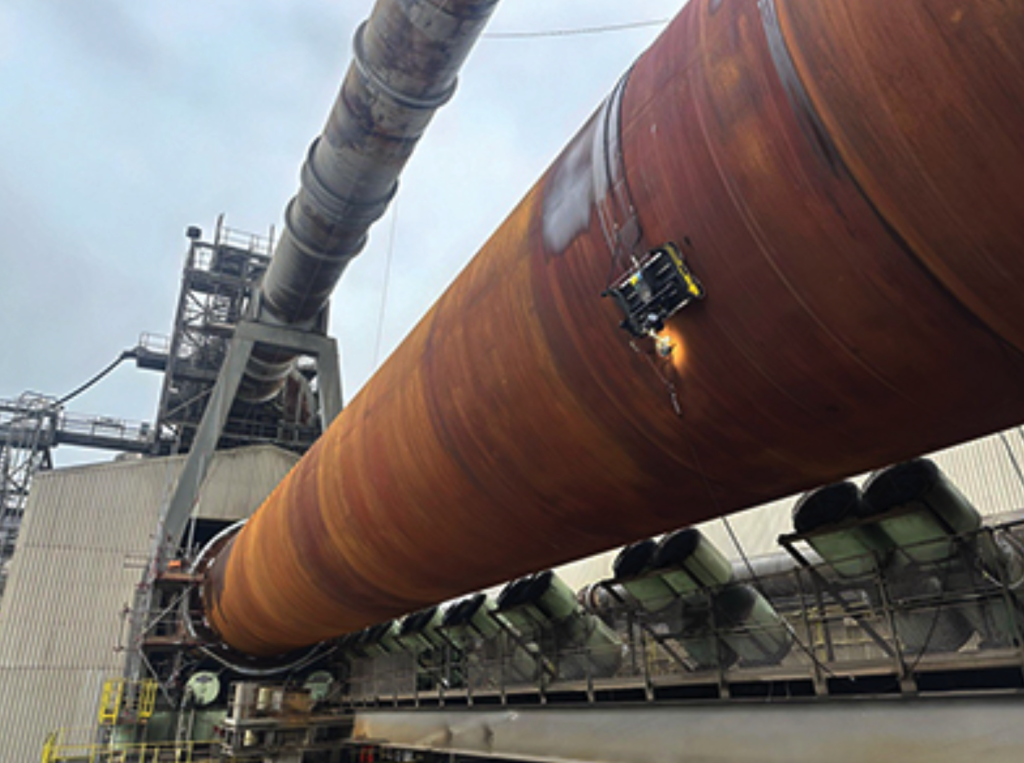
A wall-climbing robot has successfully carried out ultrasonic testing across a 70-metre rotary cement kiln at Cemex’s Rugby plant. The automated system performed non-destructive thickness measurements on the steel shell, entirely eliminating the requirement for human technical teams to work at height using traditional scaffolding or rope-access setups.
Rotary kilns operate under extreme thermal and mechanical stresses, requiring regular structural integrity checks to detect shell thinning and prevent catastrophic failures. Conventional inspection methods require extensive temporary access infrastructure, taking days to erect and dismantle while exposing contractors to significant working-at-height risks. By deploying a climbing robotic crawler equipped with ultrasonic transducers, the facility completed the mandatory safety audit in a fraction of the time without placing personnel in high-risk zones.
What does this mean for a UK tradesperson or DIYer actually buying this kit — does it change what they should pay, buy, or watch out for?
For site-based contractors, commercial sub-contractors, and plant maintenance engineers, this deployment highlights a clear shift in how industrial assets and large structures are maintained. While specialist inspection crawlers are not items you will pick up off the shelf at Screwfix or Toolstation, the growing adoption of robotic survey tools directly influences project lead times and safety overheads on major industrial sites.
As commercial clients increasingly specify automated and remote inspection methods in maintenance tenders, sub-contractors operating in industrial environments should expect tighter safety protocols and reduced allowances for traditional working-at-height access setups.
Reported by ScaffMag — original article
Price alerts on the kit you're watching, plus the deals our team files each day.
Create a free account