








































Unravel the mysteries of your tape measure! Learn to read inches, millimetres, and those crucial hidden marks with our UK DIY guide. Compare prices at DSIDE.co.uk.
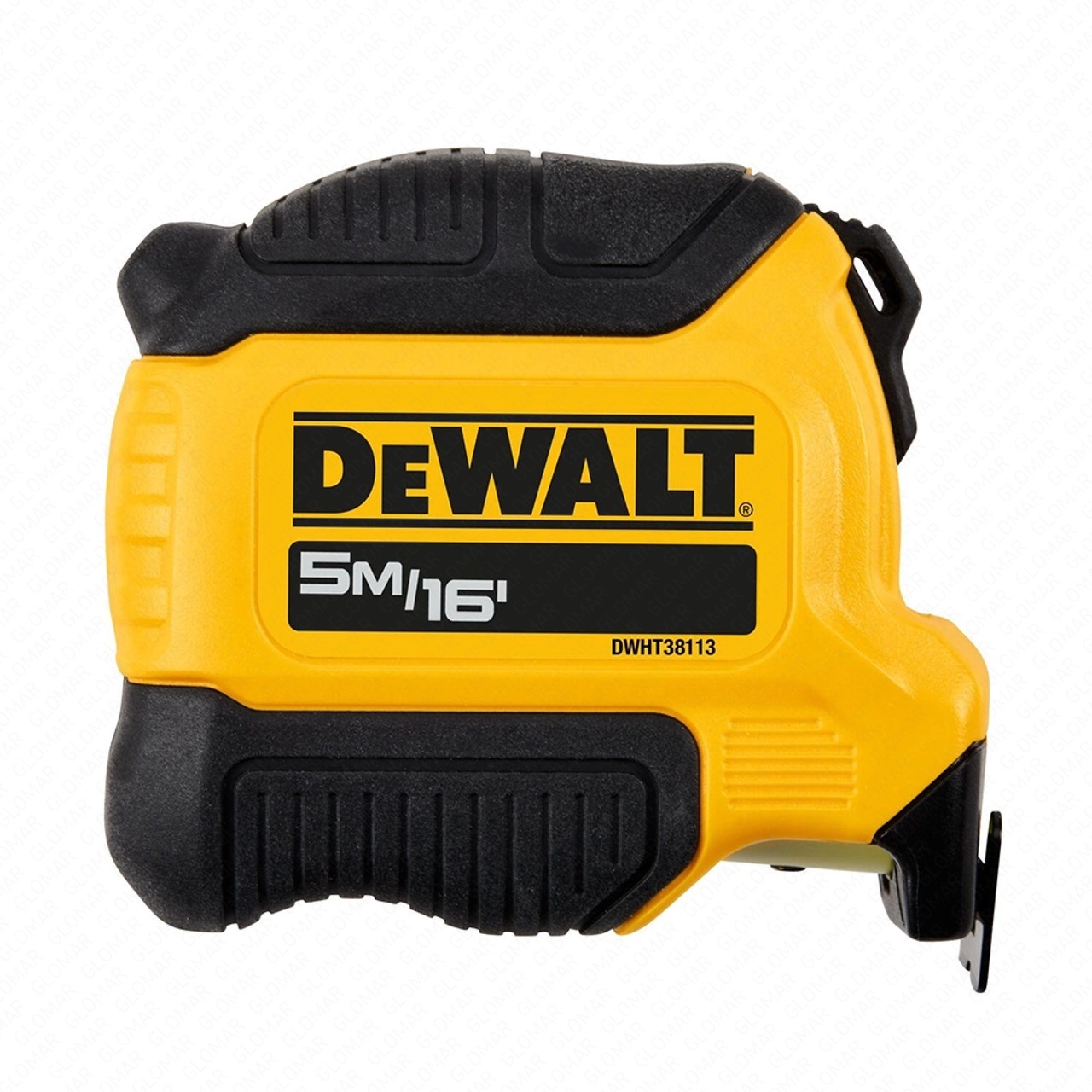
Ever found yourself staring at a tape measure, confident with the big numbers but utterly baffled by the myriad of lines in between? You're not alone. Many DIY enthusiasts and even seasoned tradespeople in the UK use a tape measure daily without fully understanding every single mark. At DSIDE.co.uk, we know that getting your measurements right is the cornerstone of any successful project, whether you're building shelves, fitting a kitchen, or hanging a picture. This guide will demystify your tape measure, explaining those 'secret' marks and providing practical tips to ensure your projects are always spot on.
While the UK officially uses the metric system, imperial measurements (feet and inches) are still widely prevalent, especially in construction, DIY, and when dealing with older properties. Most quality tape measures, like those from DeWalt, Makita, Bosch, or Milwaukee, will feature both scales. Understanding how to read both is crucial.
For example, a measurement of 245mm would be 24.5cm. Simple, right?
The trickiest part for many is reading the fractions of an inch. A typical tape measure will divide an inch into 16ths. Let's break it down:
To read a fractional measurement, count the number of small lines after the last full inch and put that number over 16. Then, simplify the fraction if possible. For example, 8 lines past the 3-inch mark would be 3 and 8/16 inches, which simplifies to 3 and 1/2 inches.
Beyond the standard measurements, your tape measure holds some secret symbols and colours that can be incredibly useful. Let's decode them.
This is perhaps the most common 'mystery' mark. You'll often see a red box, a red number, or a small black diamond at every 16-inch increment (16", 32", 48", 64", etc.).
Purpose: These marks indicate standard stud spacing in North American construction, where wall studs are typically placed 16 inches on centre. While UK stud work often uses 400mm or 600mm centres, these 16-inch marks can still be handy for understanding imperial-based pre-manufactured items or for converting between systems. Many loft insulation rolls, for example, are designed for 600mm joist centres, but some older or imported products might relate to imperial. Always check your specific project requirements!
These small black diamonds, sometimes referred to as 'black glaids', appear every 19.2 inches (19 1/5", 38 2/5", etc.).
Purpose: This is another stud-spacing reference, specifically for truss layouts. If you divide a 96-inch sheet of plywood (a standard sheet length in the US) by 5, you get 19.2 inches. These marks allow five equal spaces across an 8-foot sheet, ensuring that all joints land on a stud. Less common in UK DIY but good to know!
Some tape measures, particularly those aimed at the UK market or with a good mix of metric/imperial, might feature small black triangles at 300mm, 400mm, or 600mm intervals.
Purpose: These are UK joist/stud spacing markers. 400mm and 600mm are very common centres for ceiling joists, floor joists, and wall studs in British construction. If your tape measure has these, it's a huge time-saver for framing or locating joists for drilling!
Many metric tape measures will highlight every 10cm (100mm) or every metre with a different colour, typically red or black.
Purpose: This is purely for readability and speed. It helps you quickly identify larger measurements without having to count every single centimetre mark. For example, on a Makita 5m tape measure, you might see the '10' for 10cm in red, then '20' in black, and so on, making it easier to read something like 175cm as '1 metre 75 centimetres'.
The type of tape measure you need depends on your typical projects:
Understanding every mark on your tape measure transforms it from a simple measuring tool into a powerful aid for any DIY project. Knowing the purpose of those red marks, black diamonds, or even UK-specific triangles can save you time, improve accuracy, and ultimately lead to more successful outcomes. The next time you grab your trusty tape, take a moment to appreciate the subtle engineering and design that goes into making it an indispensable tool.
Ready to upgrade your measuring tools or find the best deals on your next DIY project essentials? Head over to DSIDE.co.uk to compare prices from top UK retailers like Screwfix, Toolstation, and Amazon UK. We help you find the right tools at the right price, every time!
Price alerts on the kit you're reading about, plus the bargains our team files each day.
Create a free account
Comments (0)
No comments yet.