







































A practical guide to selecting backpack blowers, evaluating airflow, engine size, and ergonomics for commercial grounds maintenance and landscaping.
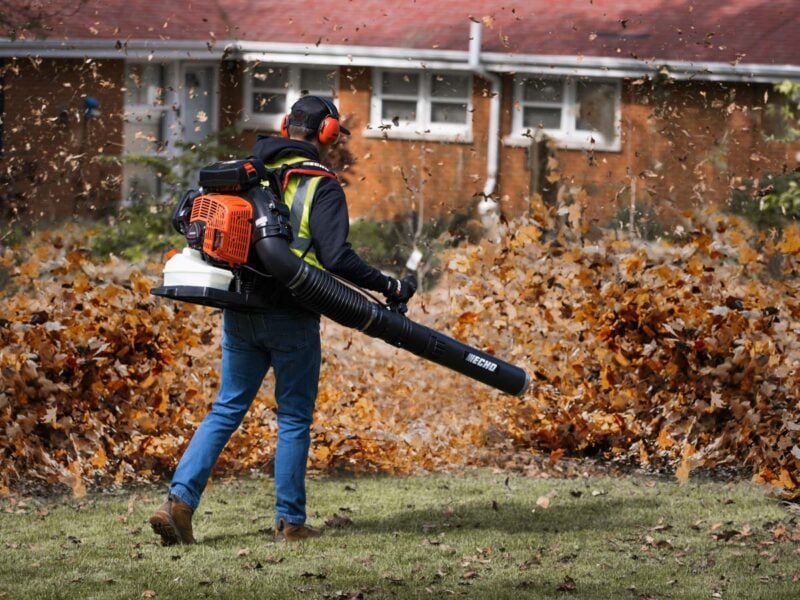
Backpack blowers remain an essential tool for grounds maintenance crews, landscapers, and civil contractors clearing debris, leaves, and site waste. ECHO, which originally invented the backpack blower, continues to feature heavily in this market alongside competing petrol and cordless options. Choosing the correct unit requires balancing clearing force, engine displacement, overall weight, and operator comfort.
When comparing models, tradespeople must look beyond basic engine capacity and evaluate both air volume, measured in cubic feet per minute (CFM), and air speed, measured in miles per hour (MPH). High CFM provides the lifting power needed to move heavy, wet debris or gravel, while high MPH helps scour stubborn dirt from tarmac and block paving. Combining these factors gives the total blowing force, which directly dictates how quickly a site can be cleared.
For operators spending hours on end clearing large sites, physical fatigue is a primary factor. Heavy-duty backpack blowers require padded shoulder harness systems, chest straps, and effective anti-vibration mounts to isolate the engine housing from the user's frame. Modern commercial models also incorporate hip belts to distribute weight away from the shoulders onto the lower body, alongside adjustable control handles to accommodate different user heights.
What does this mean for a UK tradesperson or DIYer actually buying this kit — does it change what they should pay, buy, or watch out for?
For landscape contractors buying through trade channels like Screwfix, Toolstation, or specialist machinery dealers, matching the blower to the job scope is critical to avoid overspending or buying underpowered gear. Entry-level petrol or 56V cordless backpack blowers suit smaller residential maintenance, but large commercial grounds demand high-CFM petrol units or multi-battery commercial platforms. Buyers should check total operational weight including fuel or dual batteries before purchasing, and factor in ongoing servicing costs for two-stroke engines versus the higher initial outlay of high-capacity cordless platforms.
Reported by Pro Tool Reviews — original article
Price alerts on the kit you're watching, plus the deals our team files each day.
Create a free account